


Hair Care Routine for Damaged Hair: A Simple Guide to Healthier, Stronger Hair
Damaged hair can look dry, dull, frizzy, or rough even when you use expensive products. Heat styling, coloring, chemical treatments, sun exposure, overwashing, and poor hair habits can all contribute to damage.
The good news? You don’t need a complicated routine to improve your hair’s condition. A consistent hair care routine for damaged hair can help reduce breakage, improve softness, and protect your strands from further damage.
This guide explains how to care for damaged hair, how to repair damaged hair naturally, and how to create the best hair care routine for dry hair using simple, practical steps.
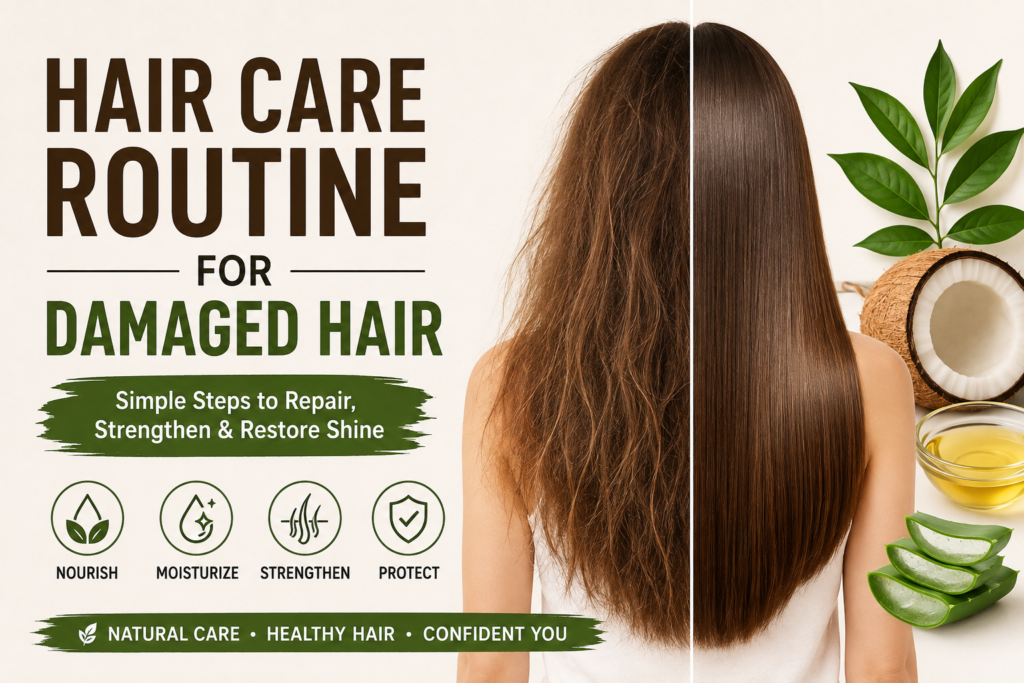
What Causes Hair Damage?
Before changing your routine, it helps to understand what’s causing the problem.
Common causes include:
- Frequent heat styling with straighteners or curling irons
- Bleaching, coloring, and chemical treatments
- Excessive washing
- Using very hot water
- Rough towel drying
- Brushing wet hair aggressively
- Prolonged sun exposure
- Chlorine and salt water
- Tight hairstyles that pull on the hair
- Lack of conditioning and moisture
Hair damage can affect the outer cuticle and, when severe, the inner structure of the hair shaft. Once hair has split or broken, products cannot permanently restore the original strand. The goal is to protect existing hair, improve its appearance, and prevent additional damage.
Hair Care Routine for Damaged Hair
A good routine should be simple enough to follow consistently. Focus on cleansing, conditioning, moisturizing, protecting, and minimizing unnecessary stress.
1. Wash Your Hair Gently
Start with a mild shampoo that suits your scalp and hair type.
You don’t need to scrub the lengths of your hair aggressively. Apply shampoo mainly to the scalp and let the product rinse through the lengths.
Avoid using very hot water. Lukewarm or cool water is generally more comfortable for the scalp and can help you avoid excessive dryness.
How often you wash depends on your scalp, lifestyle, hair texture, and product buildup. There’s no universal schedule that works for everyone.
2. Never Skip Conditioner
Conditioner is one of the most important steps for damaged and dry hair.
Apply it mainly from the mid-lengths to the ends. Leave it on for the recommended time before rinsing.
A good conditioner can make hair feel smoother and easier to detangle. This can also reduce the friction that contributes to breakage during brushing.
If your hair is particularly dry, consider using a deep-conditioning treatment once a week.
3. Use a Hair Mask Weekly
A weekly hair mask can provide extra conditioning when regular conditioner isn’t enough.
Look for formulas designed for:
- Dry hair
- Damaged hair
- Chemically treated hair
- Frizzy hair
- Breakage-prone hair
Don’t assume that using more product will produce better results. Follow the manufacturer’s instructions and pay attention to how your hair responds.
How to Repair Damaged Hair Naturally
If you’re wondering how to repair damaged hair naturally, start by changing your habits rather than relying on a single DIY treatment.
Reduce Heat Styling
Frequent high-temperature styling can make already-damaged hair more fragile.
Try air-drying when possible. When you do use a blow dryer, straightener, or curling tool, use an appropriate heat protectant and avoid unnecessarily high temperatures.
Reducing heat exposure is often more useful than adding another product to your routine.
Protect Your Hair While Sleeping
Small changes at night can help reduce friction.
Consider loosely tying long hair with a soft scrunchie or using a smooth pillowcase. Avoid sleeping with very tight hairstyles.
If your hair tangles easily, gently detangle it before bed using a suitable wide-tooth comb or brush.
Be Gentle When Hair Is Wet
Wet hair can be more vulnerable to stretching and breakage.
Instead of aggressively rubbing your hair with a towel, gently squeeze out excess water. A soft microfiber towel or cotton T-shirt can be a useful alternative.
Start detangling from the ends and gradually work toward the roots.
Trim Split Ends
No product can permanently fuse a split end back together.
Regular trims can remove visibly damaged ends and help your hair look healthier. How often you need a trim depends on your hair’s condition, length, styling habits, and personal goals.
Best Hair Care Routine for Dry Hair
Dry hair needs a stronger focus on moisture and protection.
A simple routine could look like this:
Morning or wash day
- Gently cleanse the scalp.
- Apply conditioner to the lengths and ends.
- Rinse thoroughly.
- Gently remove excess water.
- Apply a leave-in conditioner if appropriate for your hair.
- Use heat protectant before heat styling.
- Style gently.
Weekly
- Use a deep-conditioning or moisturizing treatment.
- Check your ends for excessive dryness or splitting.
- Reduce heat styling if your hair feels brittle.
- Clarify occasionally if you have significant product buildup, following the needs of your hair and scalp.
The best hair care routine for dry hair isn’t necessarily the one with the most products. It’s the one that keeps your hair manageable while reducing practices that cause additional dryness and breakage.
Ingredients to Look For
When shopping for damaged or dry hair products, you may see ingredients such as:
Conditioning Ingredients
Ingredients such as fatty alcohols, silicones, oils, and conditioning agents can help improve slip, softness, and manageability.
Humectants
Ingredients such as glycerin can help attract and retain moisture, although the results can vary depending on the formula and environment.
Protein-Based Ingredients
Hydrolyzed proteins are commonly used in products designed for damaged hair. They can temporarily improve the feel and appearance of weakened strands.
More isn’t always better. If your hair becomes stiff or rough after using protein-heavy products, consider reducing how often you use them.
Common Hair Care Mistakes to Avoid
Even a good routine can fail if damaging habits continue.
Avoid:
- Brushing hair aggressively
- Using high heat every day
- Applying excessive chemical treatments
- Sleeping with soaking-wet hair if it causes tangling or breakage
- Skipping conditioner
- Pulling hair tightly into ponytails or buns
- Frequently changing products without giving them enough time to show results
- Expecting a single oil or mask to reverse severe damage
Consistency matters more than having a bathroom full of products.
When Should You See a Professional?
Some hair problems need more than a cosmetic routine.
If you experience persistent or significant hair loss, sudden changes in hair density, scalp pain, severe itching, sores, or unexplained changes in hair texture, consider speaking with a dermatologist or qualified healthcare professional.
A professional can help identify whether the issue is related to hair-care practices, the scalp, or another underlying cause.
Frequently Asked Questions
Can damaged hair become healthy again?
Hair that has already been significantly damaged cannot be completely restored to its original condition. However, proper conditioning, gentle handling, regular trims, and reduced exposure to damaging practices can make hair look and feel healthier while protecting new growth.
How often should I wash damaged hair?
There is no single ideal schedule. It depends on your scalp, hair type, activity level, and product use. Focus on keeping the scalp clean without making the hair excessively dry or irritated.
What is the best treatment for dry and damaged hair?
A combination of gentle cleansing, regular conditioning, occasional deep conditioning, reduced heat exposure, and careful handling is usually more useful than relying on one treatment. Choose products based on your hair and scalp needs.
Final Thoughts
A successful hair care routine for damaged hair doesn’t need to be complicated. Start with the basics: wash gently, condition regularly, protect your hair from heat, minimize chemical stress, handle wet hair carefully, and trim severely damaged ends.
If you’re learning how to repair damaged hair naturally, focus first on healthier daily habits. And if your main concern is dryness, build the best hair care routine for dry hair around moisture, conditioning, and protection.
Your hair doesn’t need dozens of products. It needs a routine you can actually maintain.
CTA: Start with these simple steps today, stay consistent for several weeks, and adjust your routine based on how your hair responds.